Fluid therapy is a fundamental part of perioperative care for surgical patients and other critically ill patients. This section describes preoperative, intraoperative, and postoperative fluid management. Available crystalloid and colloid solutions are also covered. Additionally, fluid therapy for children is described.
Fluid therapy in anaesthesia and intensive care can generally be divided into preoperative, intraoperative, and postoperative fluid administration, and may collectively be referred to as perioperative fluid therapy. In the intensive care setting, fluid therapy is of course also administered to non-surgical patients.
The aim of fluid therapy is to maintain or restore fluid balance and tissue perfusion as close to normal as possible. The choice of infusion fluid must be based on a thorough understanding of the individual patient’s needs and the composition and physiological effects of the fluids administered. Basal fluid requirements are approximately 30 mL/kg/day.
A healthy adult has a daily water requirement of approximately 1500–2500 mL. Basal daily electrolyte requirements are approximately:
Sodium: 80 mmol
Potassium: 40 mmol
Magnesium: 20 mmol
Phosphate: 20 mmol
Considerations in the Choice of Fluid for Volume Replacement
When selecting fluids for volume resuscitation, the following factors should be assessed:
Volume status and tissue perfusion – replacement aims to achieve normovolaemia, defined as the intravascular volume required to ensure adequate cardiac output and peripheral tissue perfusion pressure.
Oxygen delivery – haemoglobin target levels should be set according to the patient’s age and cardiovascular status.
Coagulation – any coagulation abnormalities should be identified and corrected.
Colloid osmotic effect – the desired plasma oncotic pressure must be weighed against the potential adverse effects of hyperoncotic solutions.
Normothermia – maintenance of normal body temperature is essential for optimal physiological function and coagulation.
Guideline – Perioperative Fluid Management
Purpose
To ensure adequate perioperative fluid therapy based on the patient’s physiological requirements, fasting status, surgical invasiveness, and blood loss.
Maintenance Fluid
Maintenance requirements are calculated using a weight-based formula:
• Never give D5W in brain injury • Infuse hypertonic saline slowly • Colloids increase kidney injury risk • Monitor electrolytes and urine output • Check osmolarity before peripheral infusion
The goal of fluid therapy is to maintain or restore a normal fluid balance and tissue perfusion as much as possible. The choice of infusion fluid must be based on a solid understanding of the individual patient’s needs and the various compositions of the fluids. The basic fluid requirement is approximately 30 ml/kg/day. A healthy adult has a daily water requirement of about 1500-2500 ml. The basic electrolyte requirement is about 80 mmol Sodium, 40 mmol Potassium, 20 mmol Magnesium, and 20 mmol Phosphate.
Fluid Therapy in Circulatory Failure
Management of resuscitation fluids in critically ill patients with circulatory failure must be adapted to the underlying condition. Recent guidelines from the European Society of Intensive Care Medicine (ESICM) provide condition-specific recommendations.
Sepsis
Initial phase: Administration of up to 30 ml/kg of intravenous crystalloids may be considered, depending on the clinical context.
Optimization phase: There is no general recommendation for either restrictive or liberal fluid strategies. Instead, an individualized approach is preferred over a non-individualized strategy.
Hemorrhagic Shock
Penetrating trauma: A restrictive fluid resuscitation strategy is advised, often in combination with permissive hypotension, until definitive hemorrhage control is achieved.
Blunt trauma: Similar to penetrating trauma, a restrictive approach with permissive hypotension is recommended. Liberal fluid administration should be avoided prior to hemorrhage control.
Non-traumatic causes: Fluid therapy should be guided by hemodynamic and biochemical parameters in relation to the disease state, rather than a fixed volume approach.
Cardiac Tamponade
Fluids should be administered cautiously and only as a temporary measure until definitive treatment, such as pericardiocentesis or surgery, can be performed.
Acute Pulmonary Embolism
Clinicians should be cautious with fluid therapy. Decisions should be based on objective measurements of right heart congestion, since excessive fluids may worsen right ventricular strain.
Left-Sided Cardiogenic Shock
Fluid resuscitation should not be the primary treatment. Instead, management should focus on interventions that address impaired cardiac function, such as inotropes or mechanical support.
Acute Respiratory Distress Syndrome (ARDS)
There is no specific recommendation regarding the amount of fluid administration in ARDS. Clinical management should be individualized and balanced with lung-protective strategies.
In selecting fluid for volume replacement, consider the following;
Volume status and tissue perfusion – replacement aims for normovolemia, which can be understood as the intravascular volume needed to achieve adequate cardiac output and perfusion pressure in peripheral tissues.
Oxygen transport – the target hemoglobin level is set based on age and cardiovascular status.
Coagulation – any coagulation defect should be considered and corrected.
Colloid osmotic effect – the desired plasma level must be weighed against possible side effects of hyperoncotic fluids.
Normothermia for optimal physiology and coagulation.
It is important to consider known risks and side effects of fluid therapy, especially with large volumes (> 3 L) and in cases of SIRS. Note that synthetic colloids have not been shown to positively affect survival compared to crystalloids in controlled clinical studies. Any allergies should always be investigated. All fluid therapy carries potential side effects, even naturally occurring substances. In cases of hypothermia, infused fluids should be warmed.
Note that:
Saline solutions can cause edema and impaired microcirculation if given in large volumes.
All colloids can cause kidney effects with impaired renal function in cases of hypovolemia or hypoperfusion.
Hydroxyethyl starch should not be used in severe sepsis, in cases of significant risk of renal failure, or in critically ill patients (ICU patients).
Albumin is preferred as a colloid solution in cases of sepsis, head injuries, and liver failure.
Gelatins provide a relatively short-lasting plasma volume-expanding effect.
Dextran administration should be preceded by a hapten (Promiten), which must be specifically prescribed.
Plasma and platelets are indicated only in cases of volume deficit with expected coagulation impairment.
Fluid Therapy in Circulatory Failure
Condition
Recommendation
Sepsis, initial phase
Up to 30 ml/kg intravenous crystalloids, depending on the clinical context.
Sepsis, optimization phase
No general recommendation for restrictive or liberal fluid therapy → individualized approach preferred.
Hemorrhagic shock, penetrating trauma
Restrictive fluid resuscitation + permissive hypotension until definitive hemorrhage control.
Hemorrhagic shock, blunt trauma
Restrictive fluid resuscitation + permissive hypotension, avoid liberal fluid therapy.
Hemorrhagic shock, non-traumatic
Fluid therapy should be guided by hemodynamic and biochemical parameters in relation to the disease state.
Cardiac tamponade
Fluids should be administered cautiously and only as a temporary measure until definitive treatment is possible.
Acute pulmonary embolism
Fluids should be administered cautiously, based on objective measures of right heart congestion.
Left-sided cardiogenic shock
Fluid resuscitation should not be the primary treatment.
ARDS
No specific recommendation regarding fluid volume.
Electrolyte content in losses of various body fluids in mmoll
Body fluid
Na (mmol/l)
K (mmol/l)
Cl (mmol/l)
HCO3 (mmol/l)
H (mmol/l)
Stomach (Gastric content)
20–60
14
140
60–80
Bile
145
5
105
30
Diarrhea / colostomy losses
30–140
30–70
20–80
Losses from the ileum at high flows
100–140
4–5
75–125
0–30
Losses from the ileum at low flows
50–100
4–5
25–75
0–30
Drainage or fistula from the pancreas
125–138
8
56
85
Losses from the jejunum
140
5
135
8
Polyuria
Varies
Varies
Ref: Neilson J, O’Neill F, Dawoud D, Crean P, Guideline Development G. Intravenous fluids in children and young people: summary of NICE guidance. BMJ (Clinical research ed). 2015;351:h6388
Clinical signs of dehydration
Symptoms / signs
Mild
Moderate
Severe
Weight loss
< 5 %
5–10 %
> 10 %
Deficit (ml/kg)
< 50
50–100
> 100
General condition
Thirsty and worried
Thirsty, anxious or lethargic, halonated
Very sluggish to comatose, cold, gray, cyanotic
Mucous membranes
Normal, moisty
Dry
Very dry
Skin turgor
Normal
Reduced
Pronounced impaired
Pulse
Normal
Tachycardia
Tachycardia, weak pulse
Capillary refill
< 2 sec
Slow > 2 sec
Very slow
Blood pressure (systolic)
Normal
Normal / low
Low
Breathing
Normal
Deep
Deep and fast
Diuresis (urinary output)
< 2 ml/kg/h
< 1 ml/kg/h
< 0,5 ml/kg/h
NOTE! Higher dehydration can be used without all the characters being met. In hyperosmolar conditions with dehydration, the symptoms may appear different. Drops in blood pressure will often be late and are ominous.
Fluid therapy
Clinical Questions and Recommendations for Definition
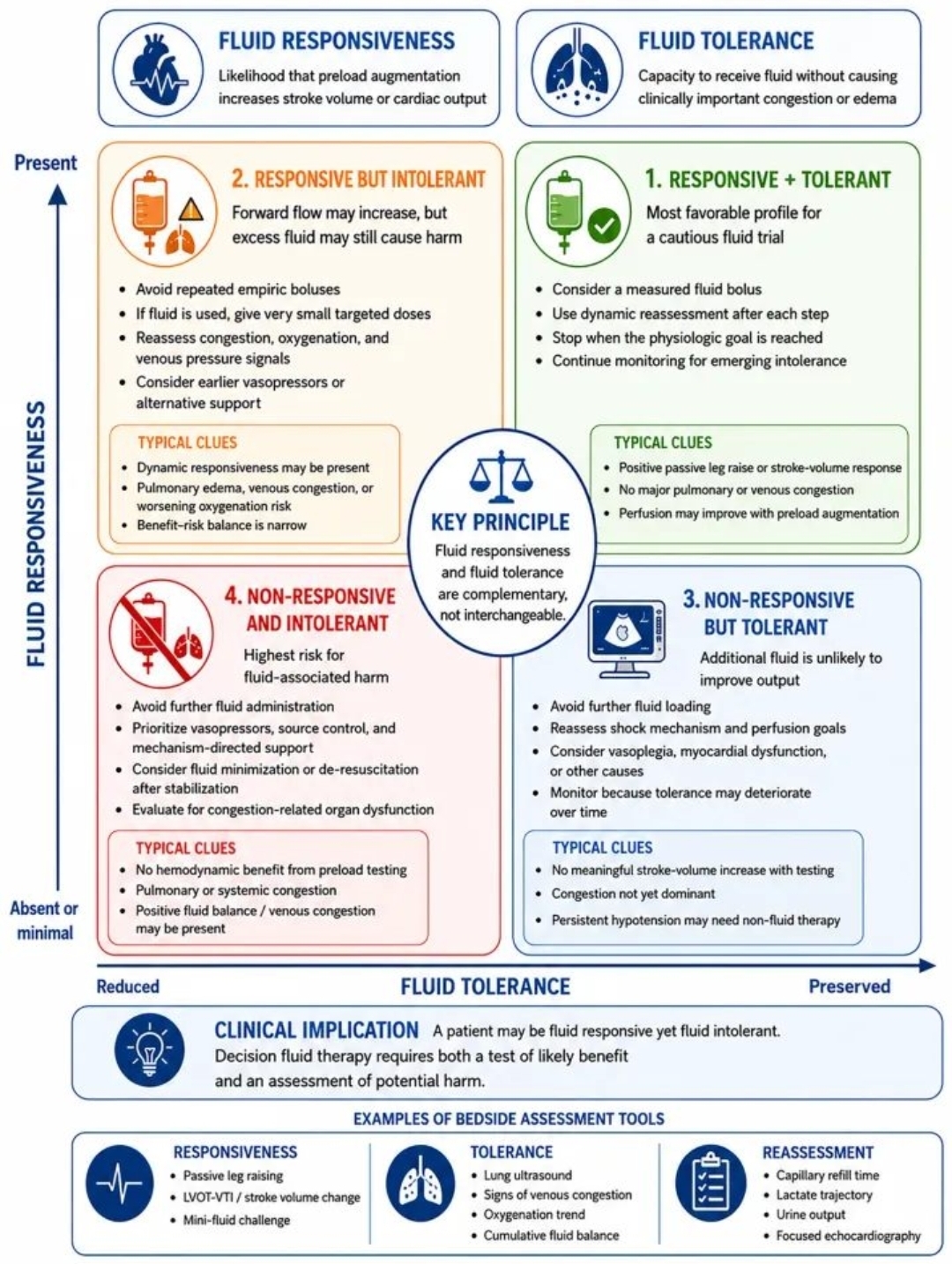
How should one assess fluid responsiveness in shock?
Recommendations
We recommend using dynamic variables over static markers of preload for predicting fluid responsiveness, when applicable. (Strong recommendation, high certainty of evidence)
We recommend using dynamic over static variables to predict fluid responsiveness, when applicable. (Level 1, QoE B – 2014 recommendation)
We recommend that commonly used preload measures (such as CVP or PAOP or end-diastolic area or global end-diastolic volume) alone should not be used to guide fluid resuscitation. (Level 1, QoE B – 2014 recommendation)
We recommend the passive leg raising (PLR) test to assess fluid responsiveness in mechanically ventilated patients in shock, with and without spontaneous breathing activity.(Strong recommendation, high certainty of evidence)
We recommend the end-expiratory occlusion test as an alternative to the PLR test in mechanically ventilated patients in shock without spontaneous breathing activity. (Strong recommendation, moderate certainty of evidence)
We are unable to provide recommendations regarding the use of the tidal volume challenge as an alternative to the PLR test in mechanically ventilated patients in shock, due to paucity and/or heterogeneity of available data. (Unable to recommend, low certainty of evidence)
We recommend pulse pressure variation (PPV) to assess fluid responsiveness in mechanically ventilated patients in shock without spontaneous breathing activity and with a tidal volume ≥ 8 mL/kg.(Strong recommendation, high certainty of evidence)
We suggest against the use of PPV alone to assess fluid responsiveness in mechanically ventilated patients in shock with spontaneous breathing activity and a tidal volume < 8 mL/kg. (Suggest against, moderate certainty of evidence)
We suggest using stroke volume variation (SVV) to assess fluid responsiveness in mechanically ventilated patients in shock without spontaneous breathing activity and with a tidal volume ≥ 8 mL/kg. (Weak recommendation, moderate certainty of evidence)
We are unable to provide recommendations regarding the use of PPV to assess fluid responsiveness in mechanically ventilated patients in shock with spontaneous breathing activity. (Unable to recommend, low certainty of evidence)
We are unable to provide recommendations regarding the use of SVV to assess fluid responsiveness in mechanically ventilated patients in shock with spontaneous breathing activity. (Unable to recommend, low certainty of evidence)
We are unable to provide recommendations regarding the use of the mini-fluid challenge test in patients with shock, due to paucity and/or heterogeneity of available data. (Unable to recommend, low certainty of evidence)
We suggest against the use of changes in inferior vena cava (IVC) diameter alone in critically ill patients to assess fluid responsiveness. (Suggest against, moderate certainty of evidence)
Free water deficit calculator for dehydration
Free Water Deficit
-
Estimated free water deficit
-
Applied K-factor
-
Target sodium
Calculation:-
Interpretation:-
Formula
Deficit (L) = K x weight (kg) x ((S-Na / target-Na) - 1)
K: child 0.6, adult male 0.6, adult female 0.5, older male 0.5, older female 0.45
This calculator is a clinical aid and does not replace medical judgment.
Preoperative Fluid Therapy
Preoperatively, fluids are usually administered to fasting patients waiting for surgery for more than 6 hours. This fluid administration is preferably given orally until 2 hours before the procedure. Alternatively, a balanced electrolyte solution with glucose can be administered. A common regimen for patients waiting for more than 6 hours is Glucose 2.5-5% (25-50 mg/ml) with electrolyte supplements, sodium 40-80 mmol/l, and potassium 20-40 mmol/l. The glucose solution can be given at a rate of 1 liter per 12 hours, which corresponds to about 80 ml/h.
Basic Fluid Needs
Daily requirement
Daily requirement at body weight 70 kg
Water
30 ml/kg/day
2100 ml
Sodium
1,1-1,4 mmol/kg
80-100 mmol
Potassium
0,6-0,7 mmol/kg
40-50 mmol
Glucose
2 g/kg
140 g
Calories (kcal)
25 kcal/kg
1750 kcal
Patients scheduled for surgery during the day may also be given Ringer’s acetate preoperatively at an infusion rate of about 100 ml/h or 1.5 ml/kg/hour. The preoperative fluid administration must take into account the patient’s current fluid status and acid-base balance.
Calculate drip rate
Drop Rate
-
Drops per minute
-
mL per hour
-
Rounded bedside rate
Calculation:-
Assumption:-
Interpretation:-
Formula
Drops per minute = drops per mL x volume (L) x 1000 / 60 / time (hours)
Default macrodrip assumption: 20 drops per mL
This calculator is a clinical aid and does not replace medical judgment.
Intraoperative Fluid Therapy
Intraoperatively, balanced electrolyte solutions are typically administered at a rate of 3-5 ml/kg/hour without glucose. This is usually administered manually through an IV set with a clamp, without a volume pump. The rate compensates for minimal surgical bleeding of 50-100 ml. If bleeding exceeds this, the rate should be increased.
Examples of common intraoperative fluids include Ringer’s acetate or Plasmalyte. Isotonic sodium chloride is reserved for patients with hyponatremia or metabolic alkalosis due to vomiting. Blood sugar should always be monitored during major or prolonged surgery over 3 hours. Normally, glucose solutions are not administered intraoperatively. For hypoglycemia, glucose is given in the form of 5% or 10% solution. In cases of severe hypoglycemia under 3.5 mmol/l, glucose can be administered as a bolus in a 20% or 30% solution, followed by a 10% solution.
Ringer’s acetate or sodium chloride can be administered intraoperatively in a volume that is 2-3 times the lost blood volume. The administration of crystalloid solutions replaces lost blood volume by approximately 20%. These solutions are distributed from the blood volume to the interstitial fluid (ISF) over about 30 minutes, providing a reasonably good initial expansion of the blood volume.
If, during surgery, the patient is assessed as hypovolemic despite administering more than 3 liters of Ringer’s
acetate, a colloid solution should be added in the form of dextran, albumin, hydroxyethyl starch, gelatin, or plasma. Colloids with hydroxyethyl starch can be administered up to 20 ml/kg body weight per hour (equivalent to 0.33 ml/kg/min or 1.2 g hydroxyethyl starch/kg body weight per hour), but not to critically ill patients, patients with sepsis, or renal failure. The administration of hydroxyethyl starch should be restricted and stopped as soon as possible. The colloid osmotic effect of human albumin 20% (such as Albumin 200 g/l) is about four times greater than that of blood plasma. In healthy subjects, less than 10% of infused albumin leaves the intravascular space within the first 2 hours after infusion.
The assessment of hypovolemia during surgery is challenging as the inhibitory effect of anesthetic agents on the autonomic nervous system causes hypotension. Signs of hypovolemia may include sudden blood pressure drop, weak pulse, weak arterial pressure curve with low filling, positional blood pressure drop (orthostasis), low central filling pressures, positive leg-raise test, low cardiac output (if measured), high EVF or Hb, and circulatory instability when administering anesthetic agents.
Check the blood pressure response to leg elevation if possible. If not, administer 500 ml Ringer’s acetate as a fluid bolus and do not repeat if no effect is seen.
Be particularly careful with positioning and transfers of anesthetized and hypovolemic patients as this can easily cause significant blood pressure drops. Elderly hypovolemic patients are particularly sensitive. A simple fluid balance calculation intraoperatively is to count the amount of fluid administered in the form of colloids and crystalloids, including blood replacement, minus urine and intraoperative blood loss. Hourly urine output is needed during major surgery or prolonged surgery over 3 hours, aiming for an hourly urine output of over 0.5 ml/kg/h, although this low flow does not seem to cause kidney damage. The drop in arterial pressure during anesthesia greatly inhibits urine production, which should be taken into account in the assessment. During minor surgery or procedures lasting less than 3 hours, hourly urine output is usually not required. In cases of intraoperative fluid overload without good urine output, diuretics can be used intravenously as usual, e.g., furosemide 5-10 mg IV.
Intraoperative fluid therapy always results in hemodilution. An Hb of 7-9 g/dL and an EVF of 25-30% is considered beneficial for microcirculation, but the optimal Hb is controversial. Younger and stronger patients tolerate hemodilution better than older and weaker patients. Dilution to an Hb value below 8 g/dl may impair blood coagulation and oxygen delivery, which depends on Hb and cardiac output, may become insufficient. At an Hb below 5.5, immediate transfusion is needed, and myocardial ischemia is common, as seen on ECG changes. Note that when administering colloids with dextran, platelet adhesiveness decreases, and bleeding tendency may increase, especially when administering more than one liter of Macrodex to a normal-weight adult.
Postoperative Fluid Therapy
Postoperatively, a combination of crystalloid solutions and glucose solutions is usually administered. To provide the patient with a basic energy requirement during the surgery day, glucose solution is typically given postoperatively in the form of 2.5% or 5% glucose with electrolyte supplements. Continued administration can be given at a rate of about 100 ml/h (80-120 ml/h) or 1.5 ml/kg/hour. Glucose solutions should not be administered faster than 10 ml/kg/hour, meaning a 70 kg patient should never receive 2.5% glucose faster than 700 ml/hour.
Electrolytes are typically added to glucose solutions in the form of sodium 80 mmol/l (40-120) and potassium 40 mmol/l (20-40). Sodium and potassium supplements are adjusted based on current lab results. Normal values are usually optimal, but not always. Severe electrolyte imbalances should not be corrected too quickly. Potassium should never be given in a peripheral vein at a concentration higher than 40 mmol/l as it is irritating to the veins and can be painful. When a large amount of potassium is needed (> 80 mmol/day), it is best administered in concentrated solution through a central venous catheter (5-20 mmol/hour, 1 mmol/ml). Potassium should not be administered faster than 10 mmol/hour, but this can be increased to 20 mmol/hour if ECG is monitored. Blood sugar should be maintained between 5 and 10 mmol/l. In cases of large urine output (> 3 liters), serum osmolality, urine osmolality, and serum and urine electrolytes should be monitored. In cases of severe head injury, diabetes insipidus is not uncommon, requiring additional fluids.
Postoperative fluid administration is guided by the patient’s blood volume, metabolism, and current losses. Normal hourly urine output is 80-200 ml/hour. Urine production should be at least 1000-1500 ml/day. Insensible losses (fluid losses through sweating and breathing) normally amount to about 700 ml/day. A patient on a respirator with humidified air has lower insensible losses, about 400-600 ml/day. At a temperature above or below 37º, insensible losses increase or decrease by 25% per degree of temperature.
Postoperative fluid administration should replace current losses. In the case of fever, extra fluid should be administered, usually 200-300 ml extra per degree above 38 degrees. Vomiting, diarrhea, and drain losses must be compensated. Vomiting and diarrhea can usually be compensated with an extra liter of crystalloid fluid, such as Ringer’s acetate. Drain losses can be compensated with colloids, such as Voluven, in the same volume as the loss.
If the patient is assessed as normovolemic, a fluid balance of minus 500 ml may constitute a good fluid balance. This is checked against body weight. It is common for body weight to increase significantly on the first postoperative day due to intraoperatively administered fluid. This weight gain can amount to several kilos. A weight gain of 0-3 kg can be considered normal after major surgery, a weight gain of 3-5 kg is considered large, while a weight gain of 5-10 kg is considered very large and more than 10 kg as extraordinary and dangerous. A weight gain of more than 10 kg often leads to fluid leakage into the lungs and other vital organs, threatening breathing, microcirculation, and organ function. A weight gain of less than 3 kg usually does not require active measures, but small amounts of diuretics may be given. A weight gain of 3-5 kg can normalize within a couple of days; in this case, a negative fluid balance should be sought through treatment with diuretics, such as furosemide 10 mg x 3. The entire weight gain should not normally be restored in a day, so do not rush.
For a weight gain of 5-10 kg, this should be treated actively through the administration of diuretics, such as intermittent or continuous infusion of furosemide. Fluid administration should be restricted. Glucose should be given in more concentrated solutions to limit fluid administration.
For a weight gain of more than 10 kg, treatment must be active and immediate. Diuretics are usually not sufficient, and dialysis, such as venovenous continuous renal replacement therapy (CRRT) via a dialysis catheter (CDK), is needed.
Postoperative fluid therapy can involve glucose solutions for up to three days. Glucose administration should be evenly distributed throughout the day to avoid hyperglycemia. In addition to sodium and potassium administration, magnesium (20 mmol/day), phosphate (20 mmol/day), and
sometimes zinc supplements are needed. Three liters of 5% glucose contains only 600 kcal, so caloric and nutritional administration should become more adequate after the third day by switching to parenteral nutrition, which also includes intravenous amino acids and fats (see this chapter).
Expansion Effect of Fluid Therapy
The expansion effect on blood volume diminishes over time at different rates for crystalloid and colloid solutions. The effect also varies depending on the patient’s condition. Increased capillary permeability and a lesser degree of retention in plasma are mainly seen in sepsis and inflammatory conditions (SIRS) but can also be seen in trauma and other severe conditions. The expansion effect can change significantly in severe conditions with increased capillary permeability, such as in sepsis and SIRS. Initially, blood volume increases as follows.
Volume-Expanding Effect of Various Infusion Solutions
1000 ml crystalloid solution increases plasma volume by 180-330 ml. Initial volume expansion is 500 ml, but it decreases within 30 minutes due to distribution to the interstitial space.
500 ml dextran increases plasma volume by about 400-500 ml, with a volume-expanding effect lasting 6-24 hours.
500 ml hydroxyethyl starch increases blood volume by 375-500 ml, with a volume-expanding effect lasting 4-6 hours.
500 ml albumin 4% increases blood volume by 375-400 ml, with a volume-expanding effect lasting 4-6 hours.
100 ml albumin 20% increases blood volume by 300 ml, with a volume-expanding effect lasting 6-8 hours.
500 ml gelatin increases plasma volume by about 400-500 ml. Gelatin has a volume-expanding effect lasting 2-3 hours.
To expand blood volume by one liter in an adult patient (70 kg), the following fluid volumes are required
Crystalloid solution: about 3000 ml.
Dextran solution: 1000-1250 ml.
Hydroxyethyl starch: 1000-1330 ml.
4% albumin: 1250-1420 ml.
20% albumin: 333 ml.
Gelatin solution: 1000-1250 ml.
Volume effect of different colloid solutions over time
Fluid Therapy for Children
Albumin 5% is standard for volume requirements
Ringer’s Acetate works in most situations
Blood, platelets, etc., based on need
All fluids can be given in boluses of 10 ml/kg over 1-4 hours
If urgent, it is easiest to give volume directly with a syringe (quickly for small children < 10 kg)
Hb limits are debated for heart-healthy children but should cope with Hb 7-9 g/dL
Basic Fluid Requirements (Use the 4/2/1 Rule)
0 – 10 kg → 4 ml/kg/hour
10 – 20 kg → 40 ml/hour + 2 ml/kg/hour for weight > 10 kg
> 20 kg → 60 ml/hour + 1 ml/kg/hour for weight > 20 kg
Clinical signs of dehydration in Children
Symptoms / signs
Mild
Moderate
Severe
Weight loss
< 5 %
5–10 %
> 10 %
Deficit (ml/kg)
< 50
50–100
> 100
General condition
Thirsty and worried
Thirsty, anxious or lethargic, halonated
Very sluggish to comatose, cold, gray, cyanotic
Mucous membranes
Normal, moisty
Dry
Very dry
Skin turgor
Normal
Reduced
Pronounced impaired
Fontanelle
Normal
Sunken
Very sunken
Pulse
Normal
Tachycardia
Tachycardia, weak pulse
Capillary refill
< 2 sec
Slow > 2 sec
Very slow
Blood pressure (systolic)
Normal
Normal / low
Low
Breathing
Normal
Deep
Deep and fast
Diuresis (urinary output)
< 2 ml/kg/h
< 1 ml/kg/h
< 0,5 ml/kg/h
NOTE! Higher dehydration can be used without all the characters being met. In hyperosmolar conditions with dehydration, the symptoms may appear different. Drops in blood pressure will often be late and are ominous.
The child's total fluid needs
Fluid requirements per kg of body weight (Holliday-Segar)
Weight (kg)
Quantity per day
Children born before w.37 and during the neonatal period
Children < 10 kg: 10 ml/kg/hour for the first 1-2 hours
Children > 10 kg: 3 – 5 ml/kg/hour for the first 1-2 hours
Then 1-2 ml/kg/hour + measured/estimated losses
Third space loss: 1-10 ml/kg/hour depending on the type of surgery
If Fluid Boluses Are Needed
Ringer’s Acetate: 5 – 10 – 20 ml/kg
Albumin 5% 5 – 10 – 20 ml/kg
Blood products: 5 – 10 – 20 ml/kg
Recommendations for Children During Massive Bleeding
Red blood cell concentrate 10 ml/kg in repeated doses
Plasma 10–20 ml/kg
Platelet concentrate 5–10 ml/kg
Cryoprecipitate 5 ml/kg
Fibrinogen concentrate 30 mg/kg
Tranexamic acid 10–15 mg/kg
Recombinant factor VIIa 90 μg/kg
Glucose Administration Intraoperatively
Glucose 10% + 40 Na/20 K
3 ml/kg/h → monitor based on blood glucose levels!
Indications
Children < 1 week if ongoing glucose infusion preoperatively
Metabolic disorders
Growth-restricted newborns
Postoperative Fluid Requirements
Give 75% of the 4/2/1 rule on the first postoperative day (due to elevated ADH)
Ringer’s Acetate
Glucose 10% + 120 Na/20 K (Reduce electrolytes for children < 6 months)
Electrolyte content in losses of various body fluids in mmoll
Body fluid
Na (mmol/l)
K (mmol/l)
Cl (mmol/l)
HCO3 (mmol/l)
H (mmol/l)
Stomach (Gastric content)
20–60
14
140
60–80
Bile
145
5
105
30
Diarrhea / colostomy losses
30–140
30–70
20–80
Losses from the ileum at high flows
100–140
4–5
75–125
0–30
Losses from the ileum at low flows
50–100
4–5
25–75
0–30
Drainage or fistula from the pancreas
125–138
8
56
85
Losses from the jejunum
140
5
135
8
Polyuria
Varies
Varies
Ref: Neilson J, O’Neill F, Dawoud D, Crean P, Guideline Development G. Intravenous fluids in children and young people: summary of NICE guidance. BMJ (Clinical research ed). 2015;351:h6388
Total intravenous fluid supply to be assumed during the first days of life
Age
Volume
Day of life 1
60–70 ml/kg/day
Day of life 2
70–80 ml/kg/day
Day of life 3
80–100 ml/kg/day
From four days old
100 ml/kg/day
Estimated fluid needs for intravenous maintenance treatment of children and adolescents
Weight
Daily fluid needs(ml/24 h)
Fluid demand per hour (ml/h)
< 10 kg
100 ml/kg/24 hours
4 ml/kg/h
10–20 kg
1,000 ml + (50 ml/kg/24 h for each kg more than 10 kg)
40 ml/h + (2 ml/kg/h for each kg more than 10 kg)
> 20 kg
1 500 ml + (20 ml/kg/24 tim för varje kg över 20 kg*)
60 ml/tim + (1 ml/kg/tim för varje kg över 20 kg)*
* Girls rarely need more than 2,000 ml / day and boys rarely need more than 2,500 ml / day as maintenance treatment even at weights exceeding 45 and 70 kg respectively.
Preoperative supply of maintenance fluid volume
Patient weight
Volume requirement according to Holliday and Segar/day
Example basal supply (ml/day)
Preoperative maintenance fluid (ml/day)
≤ 10 kg
100 ml/kg
8 kg 8 × 100 = 800
800 × 0,8 = 640
10–20 kg
1,000 ml + 50 ml/kg for every kg over 10 kg
15 kg 1 000 + 5 × 50 = 1 250
1 250 × 0,8 = 1 000
≥ 20 kg
1,500 ml + 20 ml/kg for every kg over 20 kg
25 kg 1 500 + 5 × 20 = 1 600
1 600 × 0,8 = 1 280
Peroperative fluid requirement
Patient weight
Basic volume requirement
After 1-2 hours
Add for 3rd room loss:
≤ 10 kg
10 ml/kg first 1-2 hours
1-2 ml/kg/h + measured/estimated losses
1-10 ml/kg/h depending on type of surgery
10–20 kg
3-5 ml/kg first 1-2 hours
1-2 ml/kg/h + measured/estimated losses
1-2 ml/kg/h + measured/estimated losses
≥ 20 kg
3-5 ml/kg first 1-2 hours
1-2 ml/kg/h + measured/estimated losses
1-2 ml/kg/h + measured/estimated losses
Volume of postoperative maintenance fluid
Patient weight
Basal volume requirement, /day
Example basal supply (ml/day)
After postoperative reduction (ml/day)
≤ 10 kg
100 ml/kg
8 kg 8 × 100 = 800
800 × 0,7 = 560
10–20 kg
1,000 ml + 50 ml/kg for every kg over 10 kg
15 kg 1 000 + 5 × 50 = 1 250
1 250 × 0,7 = 875
≥ 20 kg
1,500 ml + 20 ml/kg for every kg over 20 kg
25 kg 1 500 + 5 x 20 = 1 600
1 600 × 0,7 = 1 120
Bleeding
Blood Volume: 70-90 ml/kg
Bleeding is replaced according to the percentage of blood volume lost
5-10 % Ringer’s Acetate
> 10 % + Albumin 5%
> 20 % + Blood
> 50 % + Plasma
Massive Bleeding:
Guide by thromboelastogram!
Without thromboelastogram:
Administer Blood/Plasma/Platelets in the ratio: 1:1:0.5
In Case of Coagulation Disorder
+ Platelets 5-10 ml/kg
+ Fibrinogen 30-70 mg/kg
+ Cyklokapron 15 mg/kg
Note
Temperature > 36.5°C
pH > 7.2
Monitor s-Ca
Hb > 9 g/dL
Medical Disclaimer
The content on AnesthGuide.com is intended for use by medical professionals as an educational and clinical information resource and is based on practices and guidelines within the Swedish healthcare context. While all articles are reviewed by experienced professionals, the information provided may not be error-free or universally applicable.
Users are advised to always apply their professional judgment and consult relevant local guidelines.
Why are we asking this? This page may contain advertisements for prescription medications. According to the Medicines Act, marketing of prescription drugs cannot be directed at the general public, which is why we need to ask this question.
Get access to 30+ Pocket Guides, Graphic Dosage Guides, Overviews and Anesthesia Models
Join our newsletter to gain immediate access to our expertly crafted pocket guides, including:
Anesthesia & Intensive Care Essentials: Concise, practical information for daily clinical use.
Dynamic Dosage Charts: Visual guides for intravenous anesthesia management.
Pediatric & Obstetric Anesthesia: Specialized protocols for vulnerable populations.
Emergency Protocols: Quick-reference guides for critical situations.